El Tatio is Atacama's most extreme morning: a 4:30am alarm, a −10°C sunrise at 4,320 meters and eighty fumaroles throwing steam into the first light. It is also the tour people get wrong — wrong day, wrong clothes, wrong expectations. Here is what actually happens, hour by hour, and how to do it right.
What El Tatio is (and why dawn matters)
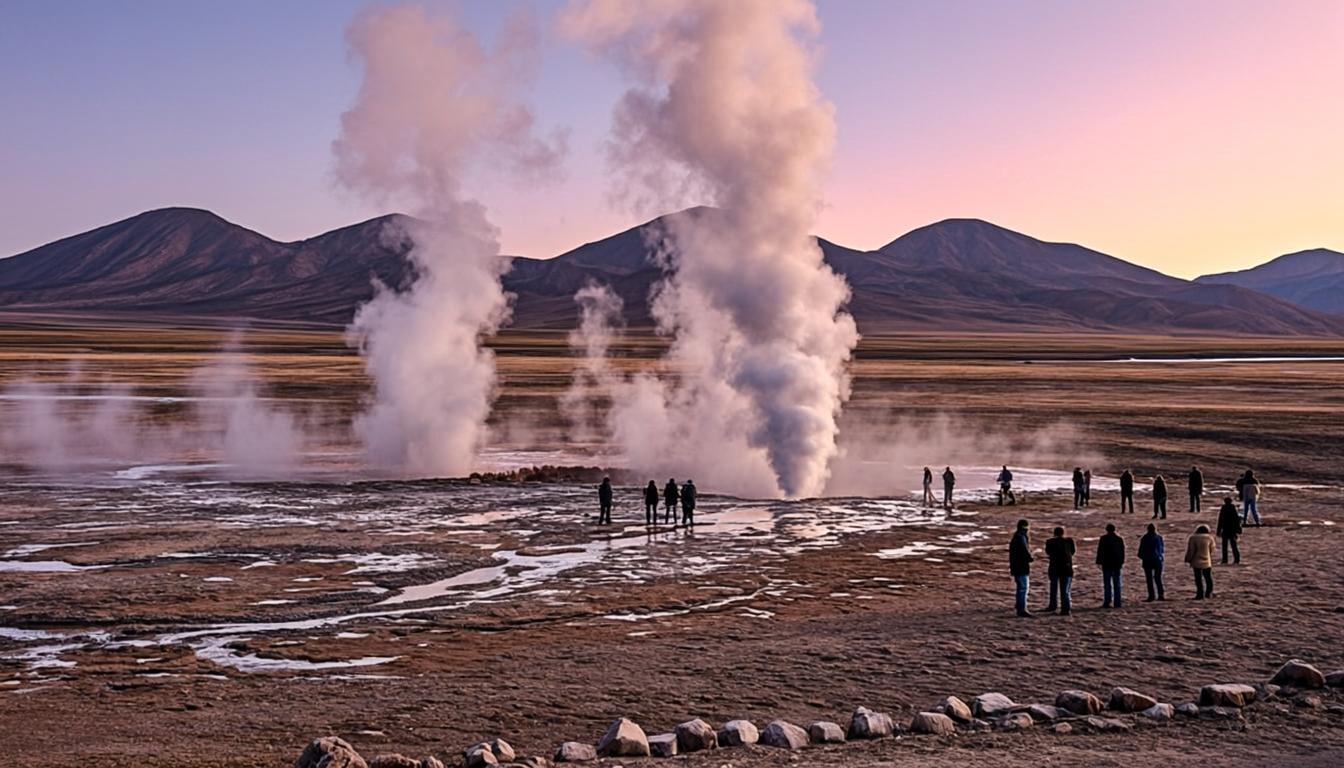
El Tatio is the world's highest geyser field and its third largest, with some eighty active fumaroles spread across a cratered basin at 4,320 m. The water underground reaches 85–88°C; at this altitude water boils at about 86°C, so the entire field sits at its own boiling point, venting constantly through holes, terraces and mud pools that shift from season to season.
The dawn timing is not a marketing gimmick. Steam columns form when superheated vapor meets cold air, so the 6:00–7:00am window — when temperatures sit between −10 and −5°C for much of the year — is when Tatio looks like the photos. By 9am the air has warmed, the columns shrink, and the tour becomes a walk past quiet pools. Sunrise lands around 6:45am; golden light through the steam is the shot everyone is chasing.
The timeline: 4:30am pickup to early afternoon
Group tours run almost identical schedules; what varies is van quality, guide depth and how early you actually arrive. The standard arc looks like this:
The breakfast reality check: most operators serve tea or coffee, bread and eggs or a sandwich around 7:30am — a snack, not a feast.
Eat something before pickup even if you are not hungry: altitude plus cold plus caffeine-only is a classic nausea recipe.
The sunrise tour hour by hour: what the itinerary leaves out
The schedule above is the skeleton; this is the flesh — including the two stops operators mention in one line and travelers remember forever. Times shift ±20 minutes with the season and your agency's entry slot:
4:30 — pickup. The van climbs out of town in the dark; sleeping is not just allowed but recommended.
5:45–6:00 — the last switchbacks: headlights on frost, ears popping, breathing noticeably heavier.
6:00–6:30 — gates open and the boardwalk loop starts in darkness: headlamps on, steam louder than you expect, the first fumarole while the field is still black.
6:45–7:15 — the sunrise window. Plumes at their tallest and most photogenic; this half hour is what the whole trip was built around.
7:30–8:00 — breakfast at the refugio tables: tea, coffee, bread, eggs. Eat properly — altitude and cold burn through you.
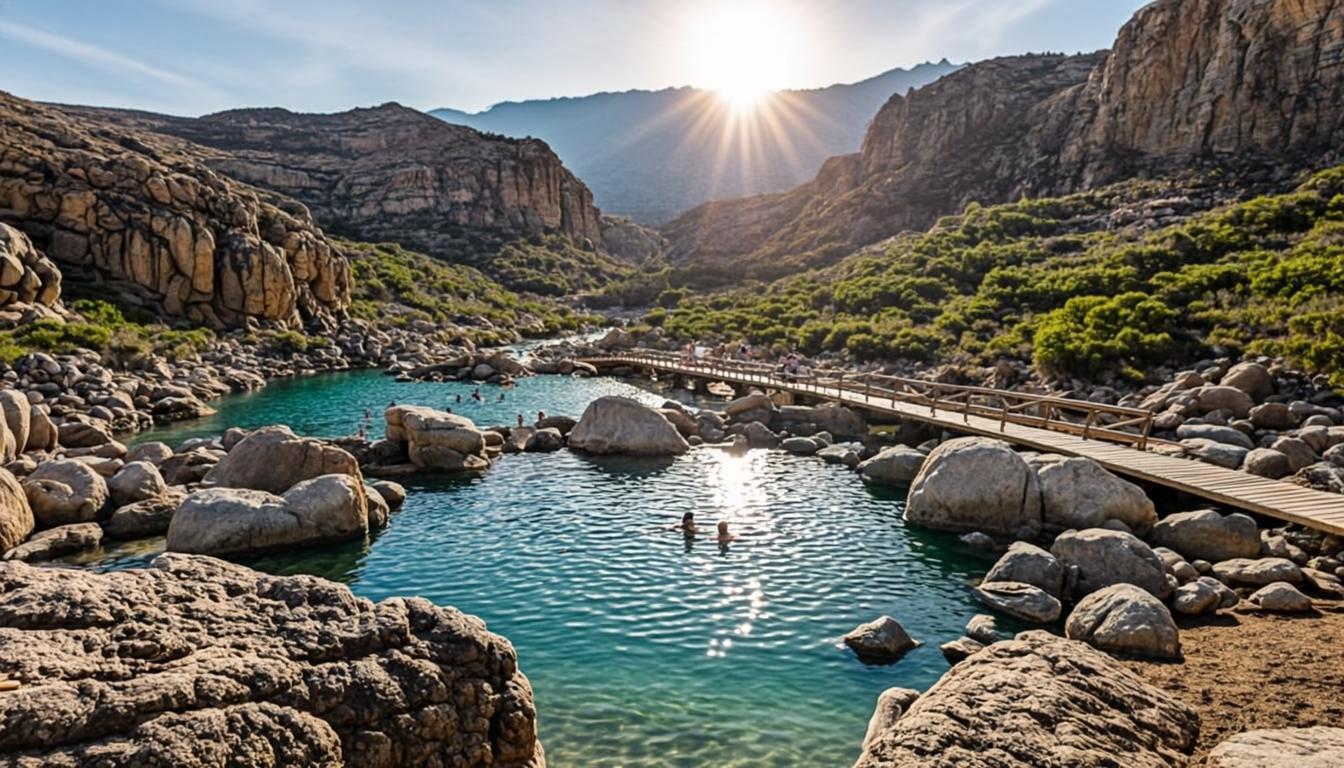
8:00–8:45 — the thermal bath window, on tours that include it: a designated pool beside the field holding around 36°C. Bring a swimsuit and towel; numbers are capped.
9:00–9:30 — a last walk past the mud pots and terraces as steam thins in the warming air.
9:45 — the vicuña viewpoint on the descent road: herds on the high plain and the first full look back over the basin.
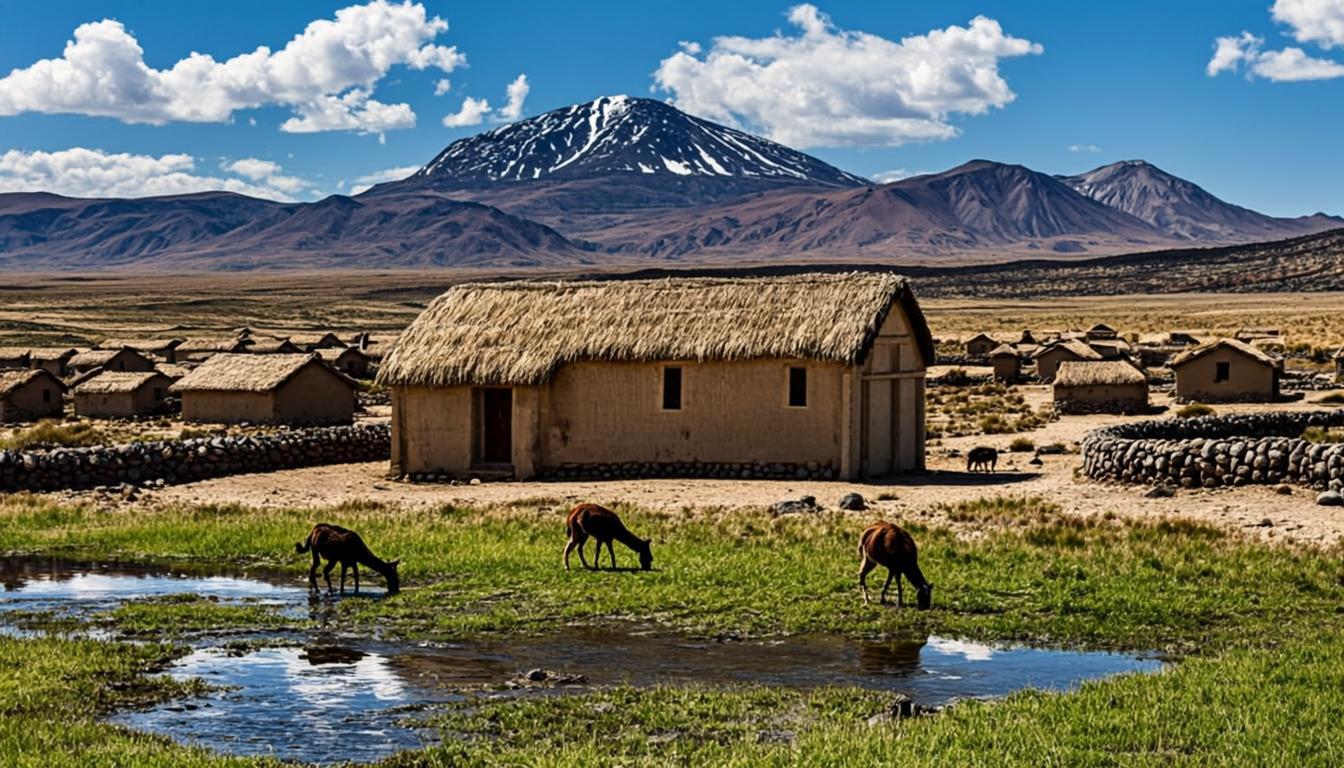
10:45 — Machuca (4,000 m): llama skewers, empanadas, the little church, ten minutes of sun.
12:30–13:00 — back in San Pedro. The afternoon is free, and you will want it to be.
Pack the three things the itinerary line forgets: swimsuit and towel for the bath window, sunglasses for the ride home, and an empty memory card.
Safety and the rules that actually matter
The field is a protected geothermal area, and people do get hurt when they ignore that. Crusts around vents are thin and the water scalds; the boardwalks exist for both reasons. Every operator repeats the same rules, and rangers enforce the important ones:
Stay on marked paths and boardwalks — vents shift and crust breaks without warning
Never touch or enter the water: it runs 85°C and hotter
No drones anywhere in the reserve, and the steam ruins footage anyway
Watch your step on frost-slick boardwalks at dawn
Carry three liters of water — dry cold dehydrates faster than you notice
If a guide says a zone is closed or roped off, that is geology talking, not bureaucracy: the ground near active vents is genuinely unstable.
Altitude: why this is a day-three trip
El Tatio is the highest site most San Pedro itineraries touch, and you arrive cold, half-awake and physically idle — exactly the conditions where altitude symptoms are easiest to misread. Doing it on day three, after two nights at 2,450 m, turns a miserable morning into a great one. Our altitude guide sets out the full protocol; the short version: a headache that ibuprofen fixes is normal, vomiting or stumbling is a descent signal, and guides carry oxygen for a reason.
If you absolutely cannot move the tour, mitigate: hydration the day before, a real dinner, no alcohol and a slow pace on the boardwalks. But the honest advice is simpler — book it for day three and stop negotiating with physiology.
What to wear (this is the winter-clothes tour)
The packing question every Tatio review complains about. You will stand in the dark at −10°C with wind, then warm up fifteen degrees by 10am. The kit that works: thermal base layer, fleece, windproof jacket, beanie, gloves and closed shoes — plus a daypack to shed layers into as the sun climbs. The full packing list covers it; skip sandals, skirts and any it-is-the-desert assumptions entirely.
Hands and feet are the usual failure points, not torsos. If you own thin liner gloves, bring them for photos, and pick socks you would wear skiing. Hot drinks from the tour help from the inside out.
Group tour vs private: which is worth it
Group tours from US$73 include transport, breakfast and guide; the variable is arrival time, because agencies get staggered entry slots and the first vans walk empty boardwalks. Private tours (roughly US$250–350 for up to six) buy an earlier start, your own timeline and a guide with real geology if you pay for one. Our honest split: groups are fine if you pick a well-reviewed operator from the comparison table; private is worth it for photographers, families with kids, or anyone genuinely afraid of the cold.
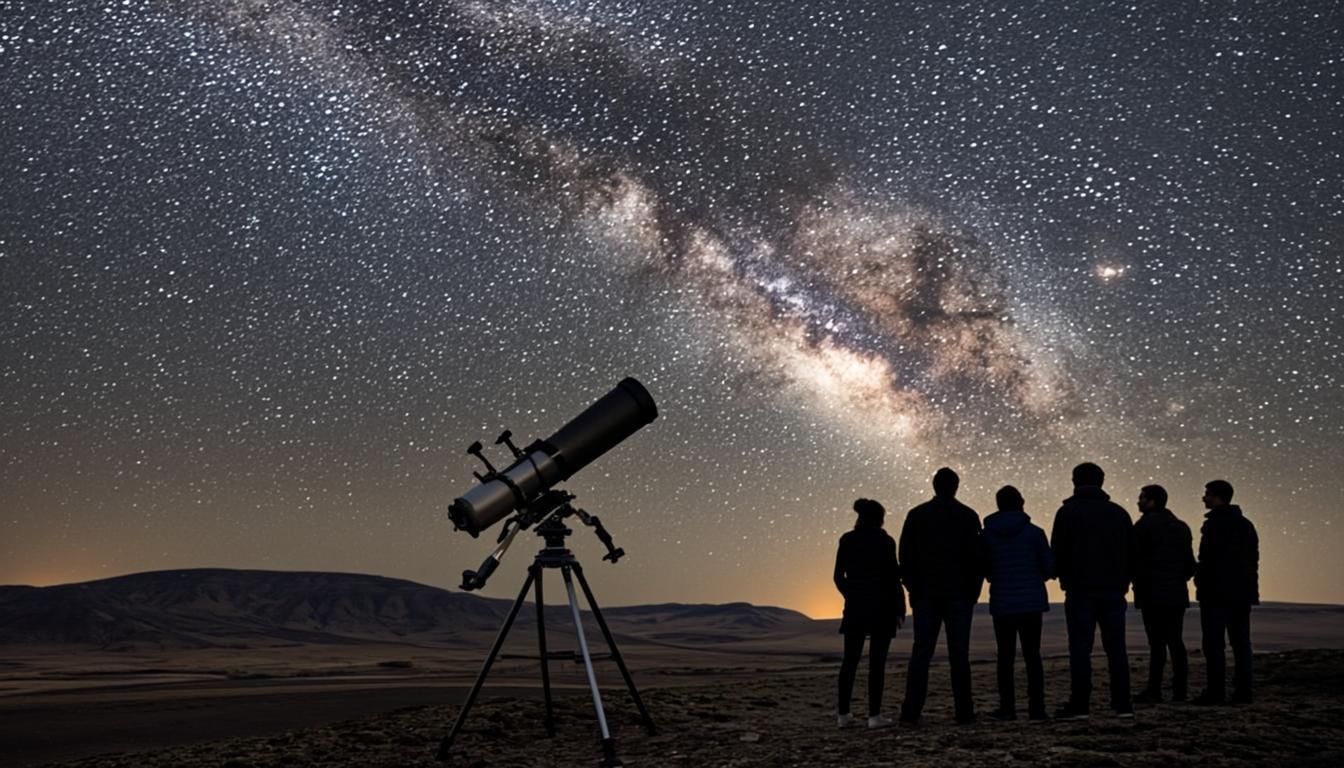
One more variable: July mornings are the coldest of the year and the best of the sky. If you are there in winter, pairing Tatio with a stargazing night in the same 24 hours is the Atacama maximalist combo — and in shoulder months you trade a little steam for a lot of solitude.
Doing Tatio without a tour: the self-drive reality
It is possible, and for a certain kind of traveler it is the best version of El Tatio. The graded-gravel road from the San Pedro side (via the Puritama turnoff) is passable in a normal 2WD sedan in dry conditions — no 4x4 required, whatever the rental agency implies. Rent in Calama the day before (from about CLP 45,000/day, more in high season) and you skip the pickup-window logistics entirely.
The honest risks, none of them trivial: frost and black ice on the first kilometers before 9am — the sketchiest stretch arrives precisely when you would be driving it in the dark; zero phone signal for all 89 km; no lighting, no shoulders and livestock on the road at dawn; and a cold that turns a flat tire into a 40-minute event. Leave at 4:30am with a full tank, a confirmed spare tire, water, blankets and offline maps downloaded. If that list makes you hesitate, the US$73 group tour is mostly buying that risk off you.
The payoff is real: you set the pace, and above all you can stay. Tour vans clear out between 9:30 and 10:30, and the 45 minutes after they leave — steam thinning, light flattening, the field nearly empty — is the El Tatio the photographs promise. Descend via Machuca for a late lunch on your own clock; it slots cleanly into the free afternoon of a self-guided 3-day plan.
Self-driving Tatio is a judgment check, not a road check — the sedan can do it; the question is whether you want frost, darkness and silence to be your problem at 5:45am.
Frequently asked questions
Sources & verification
Every fact in this guide was checked against Chilean institutions and reference services. We list the sources so you can verify the basics yourself — and because we do not accept sponsored claims from tour operators.
- SERNATUR — official visitor information for the El Tatio geothermal field and the Machuca road
- MeteoChile — pre-dawn temperature extremes and climate data for the 4,320 m geyser basin
- Minsal — altitude-health precautions that apply to any 4,300 m excursion
- timeanddate — sunrise times that set the roughly 6:45-7:15 active-geyser window
External links open in a new tab and lead to official Spanish-language pages. Park rules and fees can change seasonally — double-check before you travel.